Readers may be interested to see a recent feature I had published in February's issue of Soul & Spirit magazine.
It's generated lots of interest, and hopefully will boost traffic to the blog too!
Readers may be interested to see a recent feature I had published in February's issue of Soul & Spirit magazine.
It's generated lots of interest, and hopefully will boost traffic to the blog too!

At the heart of it is a need to connect on some level to something meaningful, which obviously for those bed-ridden and suffering from longterm illness isn’t always easy to do physically.
An ill person is embodied in a semi-functioning physicality. And what this does is to highlight both the importance of the body and its insignificance:
So the body might be a site for ‘triggers’ which propel us into a search for meaning beyond our embodied selves. And this is often where a spiritual journey begins. This trigger may be in the form of illness, but it can also come from suffering abuse, a mid-life crisis, or it may even come in less earthly forms such as an encounter with an angel or a spirit guide.
What triggered your spiritual journey…?
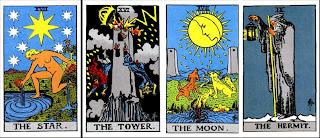


 Everyday I come across people who are involved in some kind of spiritual exploration, including those of you who are part of this blog. I hear stories of connecting with spirit through meditation or mediumship, I hear tales of walking with nature, I hear descriptions of crystals carried in pockets and prayers said to angels.
 "If there were no God, there would be no Atheists"
In the UK less than a third believe in God, whilst in the US only one member of Congress has ever admitted being an Atheist. So what is our relationship with God in contemporary society?
What does 'God' mean to you?
Is there 'a' God?
Are there many, or none at all?
What purpose does 'God' fill for you ...if any?

As I sat yesterday morning in the school hall, perched precariously on a tiny plastic chair with my knees in my armpits, eagerly awaiting the arrival of my youngest and her class mates onto the stage set ready for this year's nativity play, I mused on the annual controversythis event in the primary school calender causes.
From informal conversations in the playground, I am fairly sure that the majority of parents in the audience would not be practising Christians. Although I know there were certainly Atheists, practicing Muslims and Pagans in the assembled parent body. Yet nobody voiced concerns that the nativity play was out of place in a school, may be offensive, or in anyway biased towards one interpretation of events (although I'm a little bit dubious that even Christians really believed there were dancing snowflakes and a talking rabbit at the crib-side).
Yet a few weeks ago, some members of the parent body had complained, as Christians, that they did not celebrate Halloween and they therefore re-named the 'Halloween Disco' to the 'Autumn Festivals Disco'. (If they are objecting to the Pagan origins of the festival, perhaps they should look more closely at the origins of some of our other festivals now adopted by mainstream Christianity).
So - it got me thinking. Whilst adults are busy arguing over which festivals we should be allowed to 'promote' in the classroom, there is less debate going on about how we promote these festivals to young minds. As a non-Christian, I for example, have no objection to 'the Christmas story' as told in the nativity play, as long as it is presented as one version of many. I am more interested in my children having a broad education, and learning to be open minded, tolerant and curious about the world, rather than breeding in them the sort of knee-jerk reaction some people demonstrate to select aspects of their curriculum.
As a non-Christian, I thoroughly enjoyed the dancing snowflakes, the talking stars, the singing camels and the plastic Baby Jesus swung around by a four year old Mary more intent on waving at the audience than producing a convincing portrayal of a woman who may or may not have given birth to the Son of God.
Although in an ideal world I might prefer my kids to be learning about spirituality rather than religion, children do have an innate curiosity about what makes us all different, and what binds us together, and events like Christmas can help. I know that alongside participating in the nativity, my children are also learning about 'Christmas around the world' this term, and if we banned the nativity, surely we'd have to stop that too? And what sort of Christmas story would be left to tell then?
How do you think Christmas should be presented to children in schools?
Is there room for Baby Jesus?
Do we throw the baby out with the bathwater?
Or is there an alternative?